
Last updated November 21, 2026
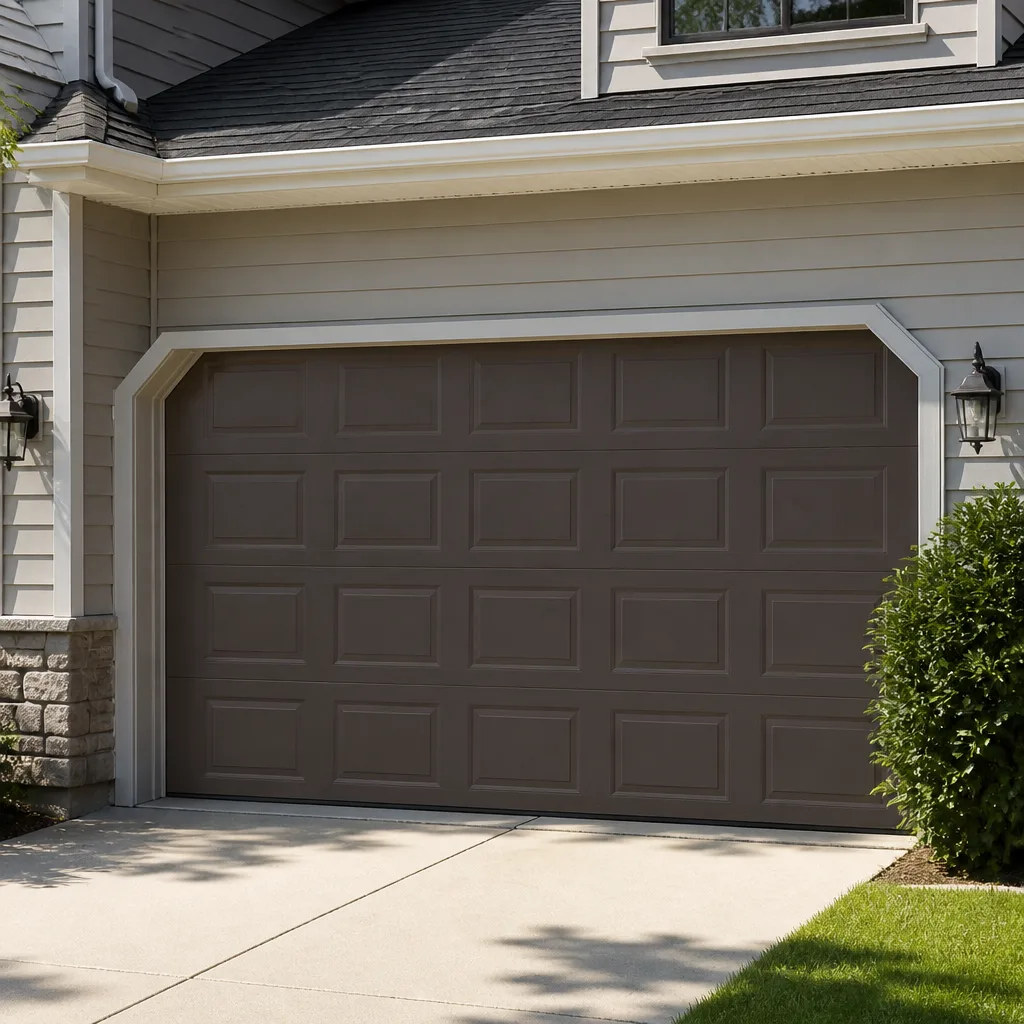 Raised-panel steel
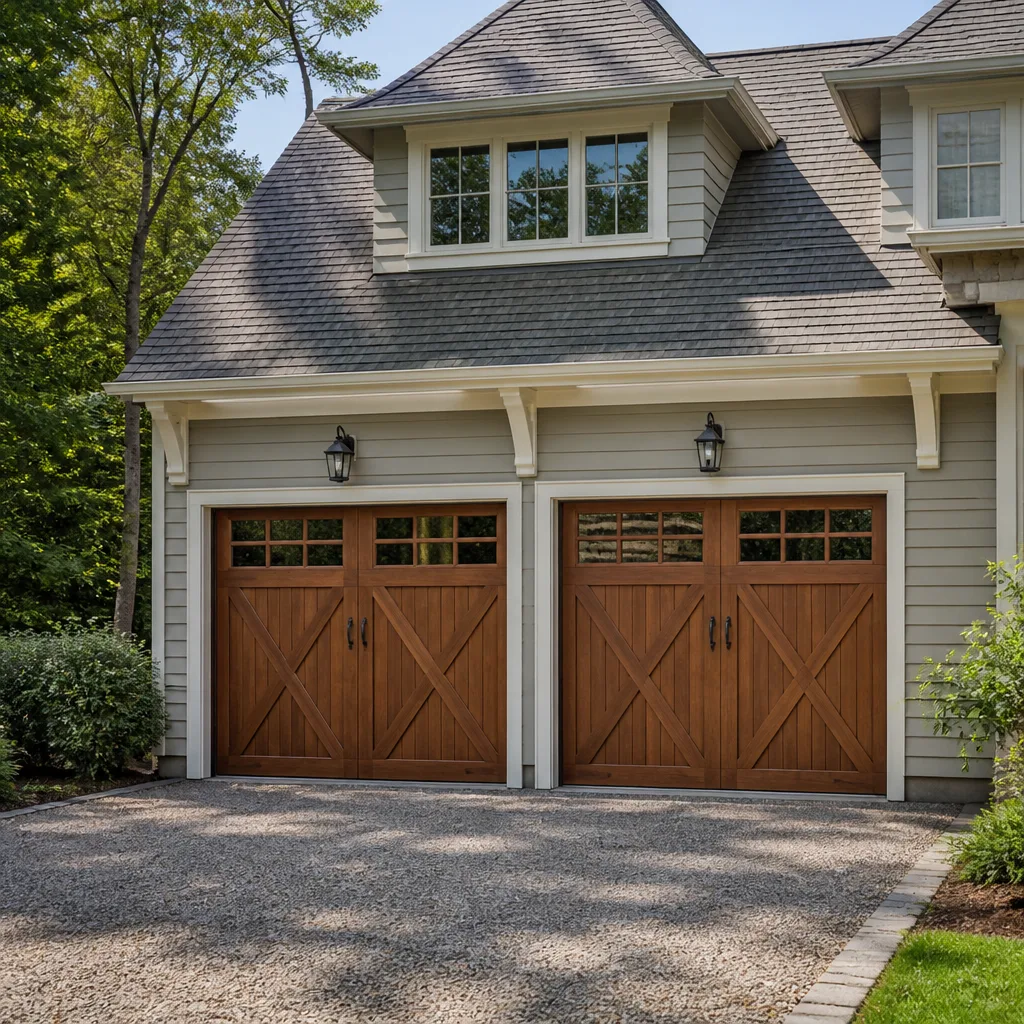 Carriage house
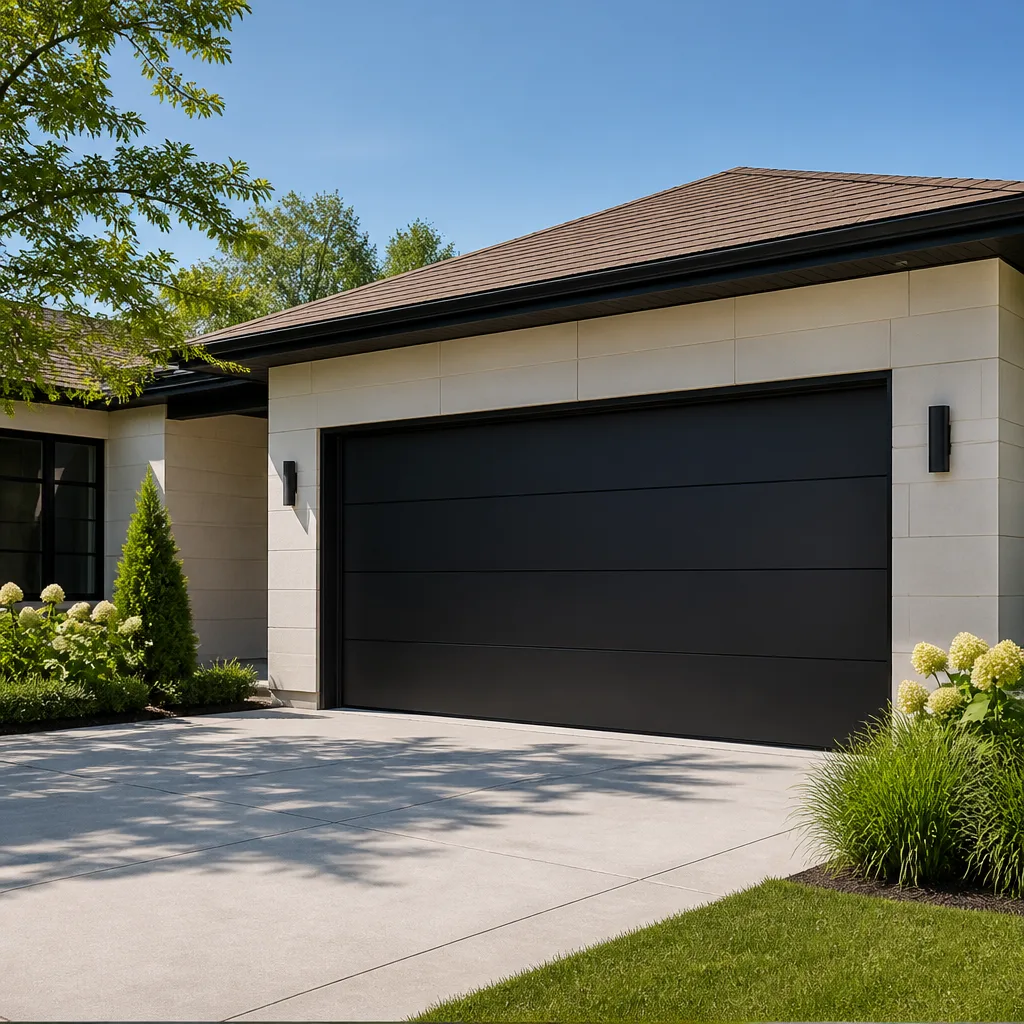 Modern flush
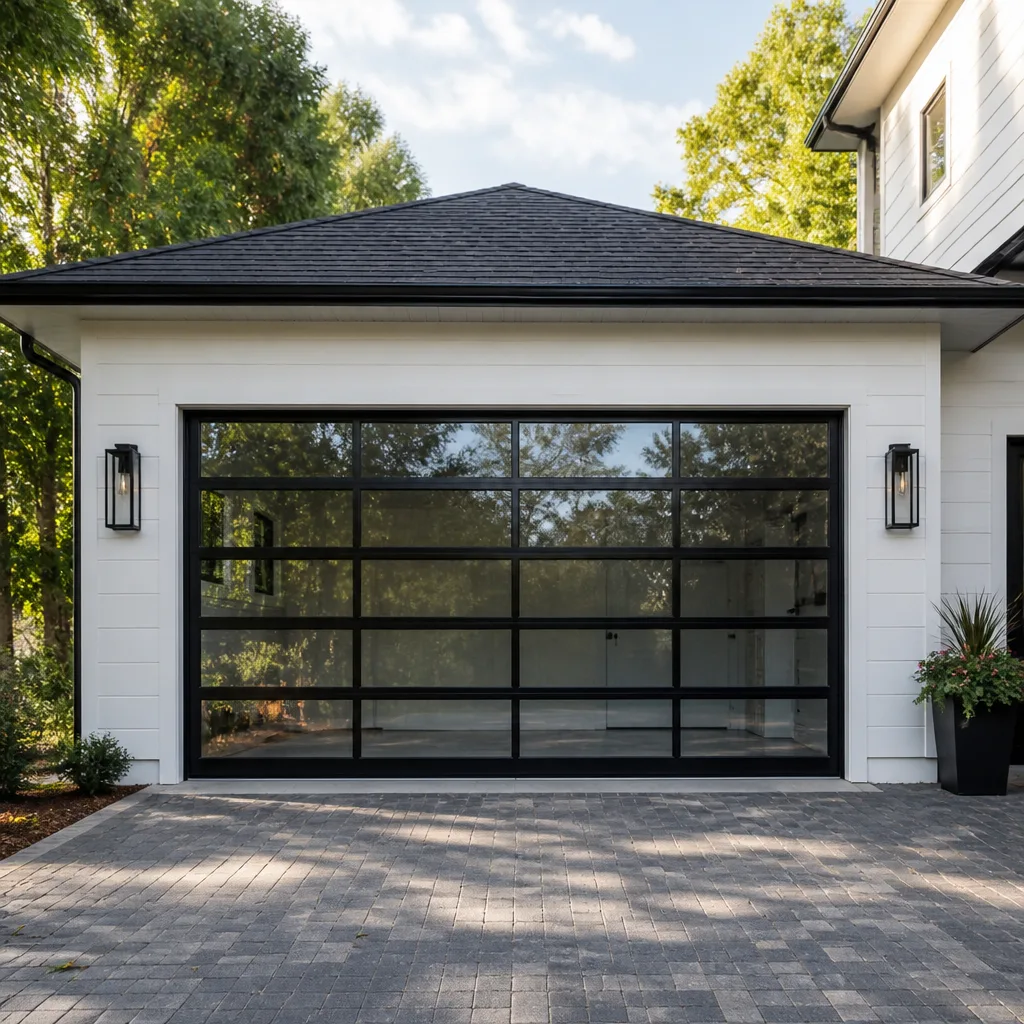 Full-view glass
 LiftMaster openers
 Chamberlain openers
Full 25-point door and opener safety check with every visit - springs, cables, rollers, tracks, and your LiftMaster or Chamberlain opener included
You get a price before we start. It does not change when the pro arrives.
Get your free estimateGarage Door Warning Signs: A Port Saint Lucie Homeowner’s Reference Guide
A torsion spring doesn’t just snap without notice. It gives you three to six months of increasingly obvious signals first: a tap at the start of every cycle, a door that hangs at the halfway point, a slight bounce at the top. The problem is nobody has ever told you what those signals sound and feel like, so they pass as “the door being a door.” Most of the emergencies we’re called to in Port Saint Lucie were visible in advance to anyone who knew where to look. This guide catalogs the sounds, movements, and appearance changes that lead up to each type of failure, so you can describe what you’re hearing accurately, sort the scheduled appointment from the same-day call, and understand what breaks next if nothing is done. All of it is organized the way you actually experience a problem – by what you notice, not by which part it lives on.
Quick Answer
Garage door warning signs fall into three groups: unusual sounds (popping, grinding, screeching, or a rattle that wasn’t there before), slowing or uneven movement (the door hesitating, dragging to one side, or reversing before it closes), and appearance changes (a visible gap in the spring coil, frayed cable, bent panel, or white mineral dust under the door). Any single warning sign is a reason to book a technician; a door that has dropped or a spring that has visibly broken is a same-day call, and nobody should cycle a door that has lost its spring tension.
Styles & brands we work with
- Raised-panel steel
- Carriage house
- Modern flush
- Full-view glass
- LiftMaster openers
- Chamberlain openers
Table of Contents
- Warning Sounds: What Each Noise Points To
- Warning Signs in How the Door Moves
- Warning Signs You Can See
- Why Your Door Slows Down in Port Saint Lucie Summer Heat
- Rust, Mineral Dust, and What Each One Means
- Spring Warning Signs and Why We Treat Them Differently
- Scheduled Appointment or Same-Day Call: A Triage Framework
- When to Call a Professional
Warning Sounds: What Each Noise Points To
Sound is the first warning a garage door gives, and most noises narrow the cause down to one or two parts before anyone lifts a screwdriver. Homeowners are usually right about which category their noise falls in and vague about which part it comes from, which is why we ask what the noise sounds like and when it happens. Here are the three that come up most often in Port Saint Lucie garages, described plainly.
A dry roller: a squeal on the way up and down
A roller that has dried out squeals. It’s a high, steady squeak that rises and falls with the door’s speed, one or two seconds per cycle, and it comes from the track line at the side of the door rather than the door itself. In the middle of a Port Saint Lucie summer it’s the most common complaint, because humidity and heat dry out lubricant faster than a cooler climate does. This is a scheduled appointment, not an emergency. It’s also the cheapest noise to chase, because the moving metal simply needs service before it starts wearing the track.
A worn or failing spring: a tap, pop, or twang
A spring on its way out makes a metallic click or single pop at the start of the up cycle, when the weight of the door transfers to the spring. It’s sharper than a roller squeal, it can come and go for weeks, and it sometimes worsens to a metallic crack. A door that also hangs slightly at one specific point is a door with a spring losing tension. A genuine spring break is unmistakable: one loud snap, the door stops in place or refuses to lift, and it doesn’t heal itself. That one is the same-day call.
A fraying cable: a rattle, grind, or the sound of wire unwinding
A cable that has begun to fray sounds like wire unraveling. It’s a rustling, grinding noise near one side of the door, often around the bottom corner where the cable attaches, and it will sound progressively worse on every cycle. This is the least common of the three and the one we’d never tell a homeowner to ignore. Once the wire starts to lose strands, that noise belongs in the same-day category – cables are high-tension and a failure is more than a nuisance. In our experience, Port Saint Lucie doors rarely have one problem at a time; a worn spring and a dry roller often arrive together, which is exactly why a technician can resolve several items on one visit.
Warning Signs in How the Door Moves
Watch your door for a week and it will tell you its condition. Movement problems are visible from the driveway and many show clearly during the first foot of travel, which is when a failing system is under the most load. These are the motion signs worth knowing by name.
- It hesitates at the halfway point. A door that passes smoothly through the bottom and top but stalls or stutters around the middle is usually a spring working below full strength. Halfway is where the spring does its hardest work.
- It drifts toward one side. If one corner reaches the floor before the other, and the door isn’t square, a worn cable or a track that has been pushed out of position is likely. Adjusting the opener won’t fix it.
- It opens partway and stops. The opener motor will trip out when resistance climbs past its limit. The door stopping partway on its way up is often the opener protecting itself from a door that has become too heavy.
- It reverses before touching the floor. A safety sensor or safety reverse has set the closer, and the door is being told to stop. This one is easy to test, and it’s an item you shouldn’t leave sitting.
- It slams down or thumps at the end of its travel. A door that finishes its cycle with a heavy thud is finishing with weight it shouldn’t have to carry.
- You can lift it by hand easily. A garage door that rises without effort is also a door with little balance. Easy isn’t good here.
Movement is the one class of warning sign that can show up overnight without any accompanying sound, so it’s worth checking with your eyes as well as your ears. If you notice a door on any Port Saint Lucie street that travels crooked, watch yours and see whether its corners arrive together. Specific garage door repair that targets motion usually begins with a balance check.
Warning Signs You Can See
A garage door announces a lot of its problems through appearance, and this is where you can learn the most from a short walk around the car. Work through these in order: they go from cosmetic to urgent.
- Check the bottom seal. A rubber seal that has cracked, flattened off, or pulled away in pieces lets air, water, and insects in. It isn’t structural, but a gap at the bottom makes the door work against the weather.
- Look at the tracks at eye level. The tracks should run straight and the vertical sections should be flush with the door. A dent or kink at the spot where the door comes up out of the track is a sign the door has been bumped or the track has shifted.
- Look up at the spring. Coils should be tightly wound with no gaps between the turns. A gap anywhere is the sign that matters most of all, and we explain that in more detail below.
- Look at the door panels. A panel that has been pushed in or that has a gap at the hinge line will drag through the tracks eventually. That doesn’t mean the whole door is done; panel and hinge work exists for this.
- Look at the cables on each side. Cable should be one solid wire, winding neatly. Kinked wire or a cable that has slipped off a drum is not cosmetic.
- Look at the opener rail and the wall bracket. A rail that has been hit, or a wall bracket pulling away from the sheetrock or block, warns you the opener is carrying more strain than it should.
- Look at the rollers. Worn rollers have a flat spot, or rattle in the hinge when you move the door by hand. Rolling it by hand isn’t something to make a habit of, but you can see the wear.
Most of what appears on this list is visible in under two minutes, standing at the front of the car with the garage light on. That short inspection is the difference between a scheduled visit to us and an unplanned tow of a car that’s been trapped. If the panels themselves have taken enough damage that a repair no longer adds up, that conversation belongs with garage door installation, and it’s worth having before the door stops moving.
Why Your Door Slows Down in Port Saint Lucie Summer Heat
A door that just runs slow in the Port Saint Lucie summer heat is usually a door telling you the opener motor is under stress, not a door behaving normally. There’s a reason this town sees it more than most. Our summers are long, humid, and hot, and the garage is a heat box: no airflow, full sun on the door for hours, an attic above it. Metal expands, lubricant thins, electronic components inside the opener run hotter than they do on a mild day. A garage door system that runs perfectly in January can feel sluggish in August.
The important distinction is between a door that has always been slow and a door that has recently become slow. The first is often a door and opener pairing that was never set up right. The second is a change, and change is the warning sign. A motor pushing against a spring that has lost some tension heats up faster, and modern openers respond to heat and resistance by slowing down or refusing to run until they cool. That’s a protective feature working as intended, not the opener deciding to give up.
Heat also affects the other half of the system. The rubber seal at the bottom softens and can drag on the slab. A door panel that expands in the afternoon can start rubbing the track it clears in the morning. If the slowdown only shows up in the heat of the day, note the time you notice it and tell the technician. That kind of detail sorts a heat problem from a mechanical one quickly. Garage door opener repair for anything on Genie or Chamberlain equipment usually starts with a proper force and travel check rather than a parts swap, and we’d rather diagnose the actual cause than guess at the motor.
Don’t accept a slow door as a permanent feature of Florida living. Slowness always has a cause, and some of those causes cost far more when they’re left to run.
Rust, Mineral Dust, and What Each One Means
Rust on a garage door isn’t all one thing, and telling the three kinds apart changes what you do about it. Springs are a good place to learn this because they’re bare metal exposed to garage air all year in Port Saint Lucie – wide swings between humid air and air conditioning. Here’s the plain-language breakdown.
Surface rust: a fine orange tint
An even orange film on the spring or on the metal brackets is surface rust. It looks worse than it is. It builds up on any unpainted steel in the garage, and a light cleaning and a protective coat stop it from spreading. No urgency. Surface rust is the warning that tells you to keep an eye on that spot.
Structural rust: flaking, pitting, or thick scale
Rust that flakes, pits, or builds a thick crust is structural. That’s metal that has lost material, and a spring that has lost material is a spring that can’t carry the door’s weight the way it was designed to. Structural rust on a spring is a scheduled replacement, not a cleaning. A cable with any rust at all gets replaced rather than cleaned. Ask for a check if you see scale anywhere on the lifting hardware.
White mineral dust under the door or on the spring
A white chalky deposit on the spring, or a white stain creeping up the bottom panel, is mineral residue. It’s the same film you see on a shower door in a humid house. It comes from moisture and minerals, and it means the metal has spent a long time wet. On a door panel it’s mostly cosmetic. On the spring it’s a sign of long-term moisture exposure, and the spring is the part to have inspected. The deposits alone don’t mean a broken spring; they do mean that spring’s working environment has been tough.
Any of the three is a reason to have the lifting hardware looked at, not a reason to ignore it because “Florida doors always rust.” If you want to compare what you’re seeing with a door in better condition, service from Port Saint Lucie Garage Door Repair starts with a free examination and an honest verdict.
Spring Warning Signs and Why We Treat Them Differently
Springs carry the entire weight of the door. That’s the single fact that makes them the most important part of this guide and the number one failure we see in Port Saint Lucie. A spring is coiled wire under high tension, and it’s the one part of your door that deserves a professional every time. If you remember one safety line from this page, it’s this: don’t try to adjust, oil the tension out of, or replace a spring yourself, and don’t pull on the winding points. The tension is in there for good reason, and releasing it the wrong way can cause serious injury.
These are the spring warning signs to watch for:
- A gap in the coil. A healthy torsion spring is a tight, even coil. A clean gap of an inch or more between the wires is a broken spring. If that gap is on only one of the pair, the other has taken all the load and is now the more fragile of the two.
- The door opens from the middle and stops. If the door lifts a foot then stops, and the opener clicks without the door moving, the spring has likely gone. The opener alone can’t lift the door, and you shouldn’t force it.
- A bang you heard from the house. A spring breaking can sound like a firecracker inside the garage. That’s a scenario where the answer is a same-day call rather than a look at the internet.
- A door that feels too heavy. If one hand can lift the door, it’s out of balance. The spring is doing less than it should. Don’t lift it again to test.
- A door that hangs at one angle. If one side starts up before the other, you’re looking at spring or cable tension on one side.
- An opener that grinds on a heavy door. The opener motor is trying to lift a door with a weakened spring. Every cycle on a failing spring wears the opener.
- Cracks in the paint on the spring. Cosmetic until they aren’t, but worth a look when the rest of the door is due for an inspection.
Springs are usually replaced in pairs, because a pair carries the load together and the surviving one has been carrying extra. When you see one broken spring, ask about the other at the same time – replacing a single spring on a door built for a pair means the older one fails soon after. Spring replacement is a core service for us, not a sideline. It’s the part most likely to strand a car, and it’s the part we see most often here because a hot garage accelerates wear.
Scheduled Appointment or Same-Day Call: A Triage Framework
Not every warning sign needs a technician today, and knowing the difference saves you a free afternoon. We use a simple three-tier framework. You can apply the same one from your driveway. When you call, tell us what tier you think you’re in and what you’re hearing; it helps us send the right parts and get it settled on the first visit.
Tier 1: Schedule an appointment
Cosmetic and wear items that don’t affect safety or balance. A squeaky roller, a door that is a little noisy, a worn bottom seal, surface rust you want stopped, an opener remote that’s intermittent, a panel that is fine but dented. Book an appointment and get it handled in one visit. Any issue in this tier that goes on for months can move up a tier, so don’t leave it forever.
Tier 2: Book this week
Change is the trigger here. A door that has recently started slowing down, hesitating at the halfway point, knocking once at the start of each cycle, or dragging to one side. Any of these belongs on the calendar quickly. The sign is that the door did not always do this. That’s an accurate description for a repair technician and the details help.
Tier 3: Call today
There’s a clear line at the top of this tier. A broken spring, a snapped or frayed cable, a door that’s come off its track, a door that’s come down off the ceiling or is hanging crooked, or a door that won’t move at all. Park the car outside, keep hands off the door, and call. These are the conditions where a door can fall, and where the pressure on the rest of the system rises through repeated use. This is where same-day service is the right call rather than a sales style. Call (855) 337-1068. We answer 24/7. Fast dispatch from 7am to 7pm, Sunday through Friday.
Common Mistakes to Avoid
- Ignoring a noise because the door still moves. A door that still cycles while making one of the noises above is a door working against a problem, and the fix is cheaper before the failure than after.
- Pulling the manual release on the last person in the house. The red cord disconnects the opener and leaves a door that’s too heavy to lift by hand. It’s an emergency lever, not a convenience. Leave it alone unless the door is stuck and a pro tells you otherwise.
- Testing a broken spring by lifting the door. Lifting a door with a broken spring is a direct exposure to spring tension or a falling door. Don’t do it, and don’t let a curious neighbor try either.
- Calling the slow door a Florida problem. Slowdowns in the heat have causes, and one of the common causes is an opener motor on its way out. Treating it as normal is the most expensive assumption on this list.
- Bumping up the opener’s force limits to force a stubborn door. Adjusting limits to overcome resistance makes the opener push harder on a door that needs service or on wiring that wasn’t meant to carry that load. That’s a job for a technician.
- Replacing one spring when a pair is installed. The unbroken spring has already carried extra load and will find the new one soon. Ask for a matched pair when the door takes two.
- Letting a small rust patch become a replaced door panel. Surface rust on a bottom panel is fixable if you catch it. Left long enough, a panel becomes a panel.
See the difference
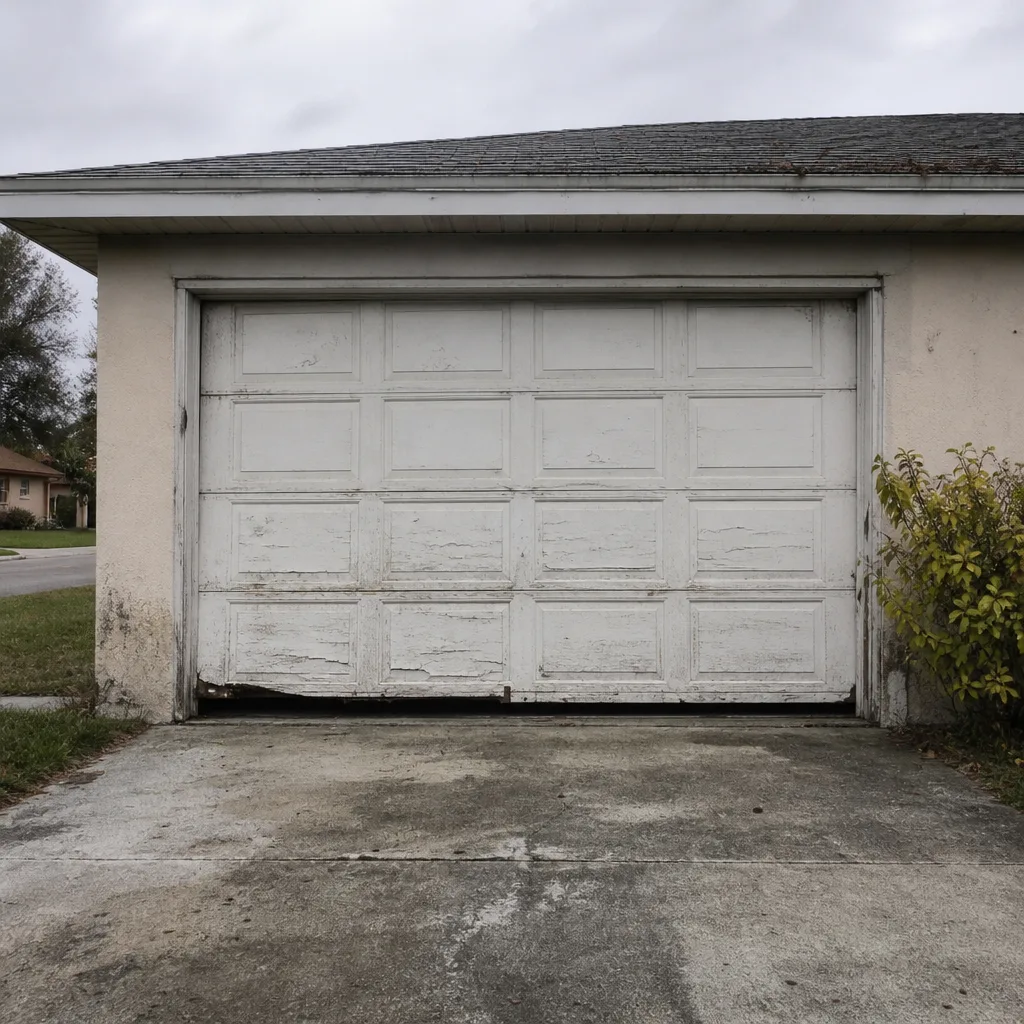 Before
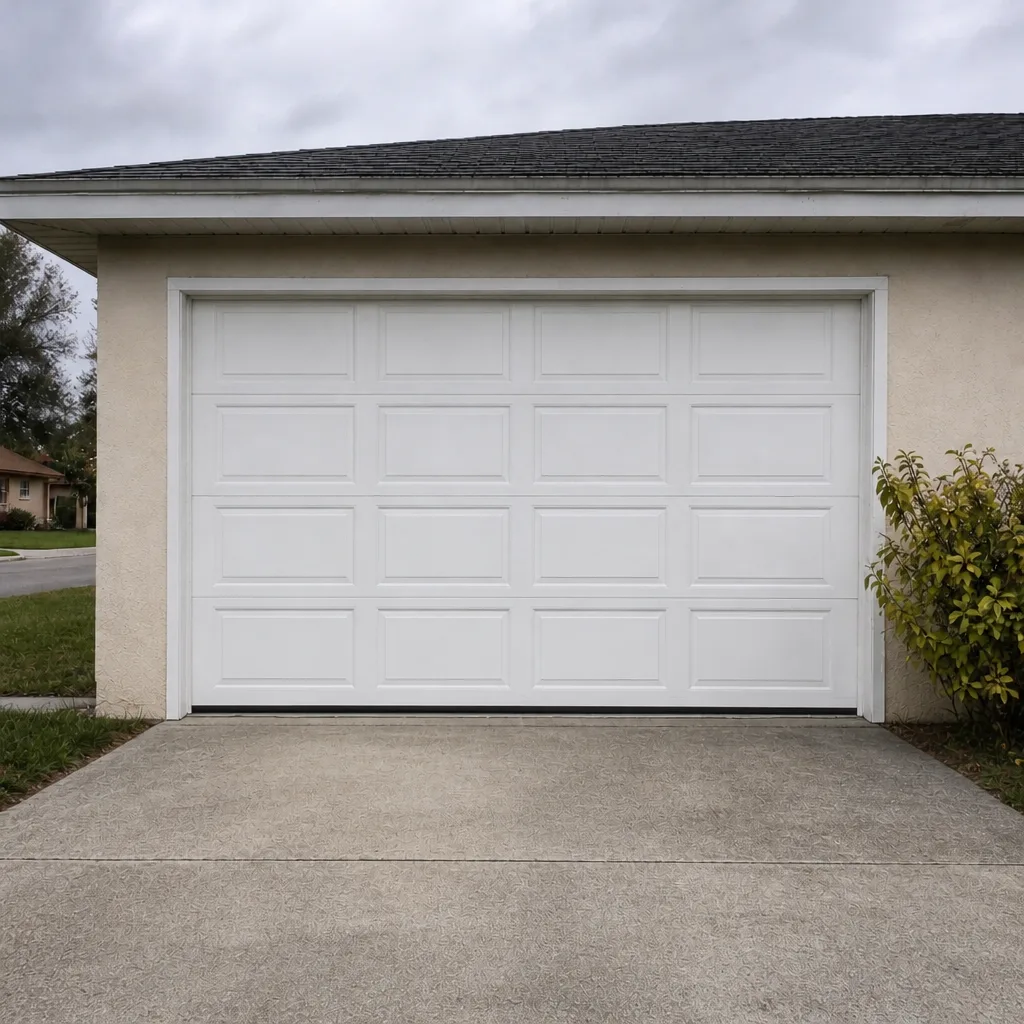 After
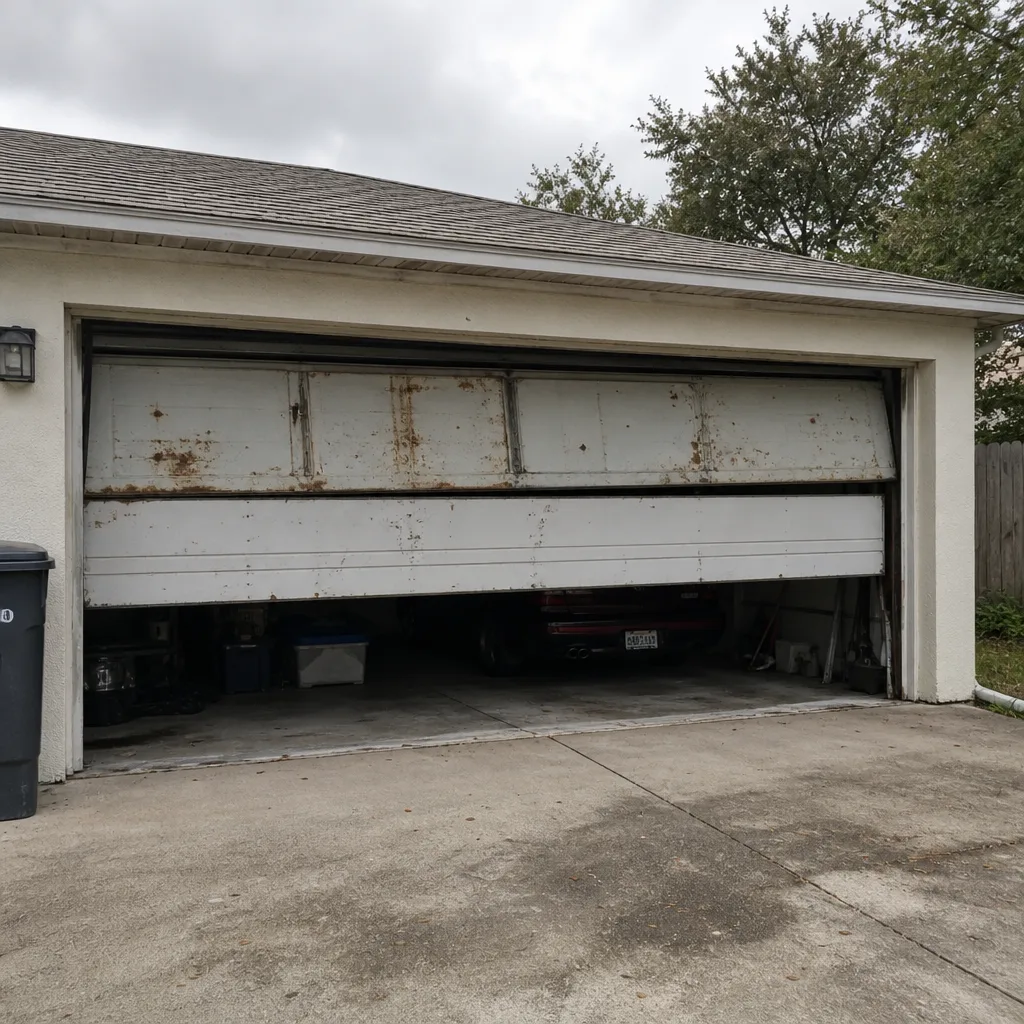 Before
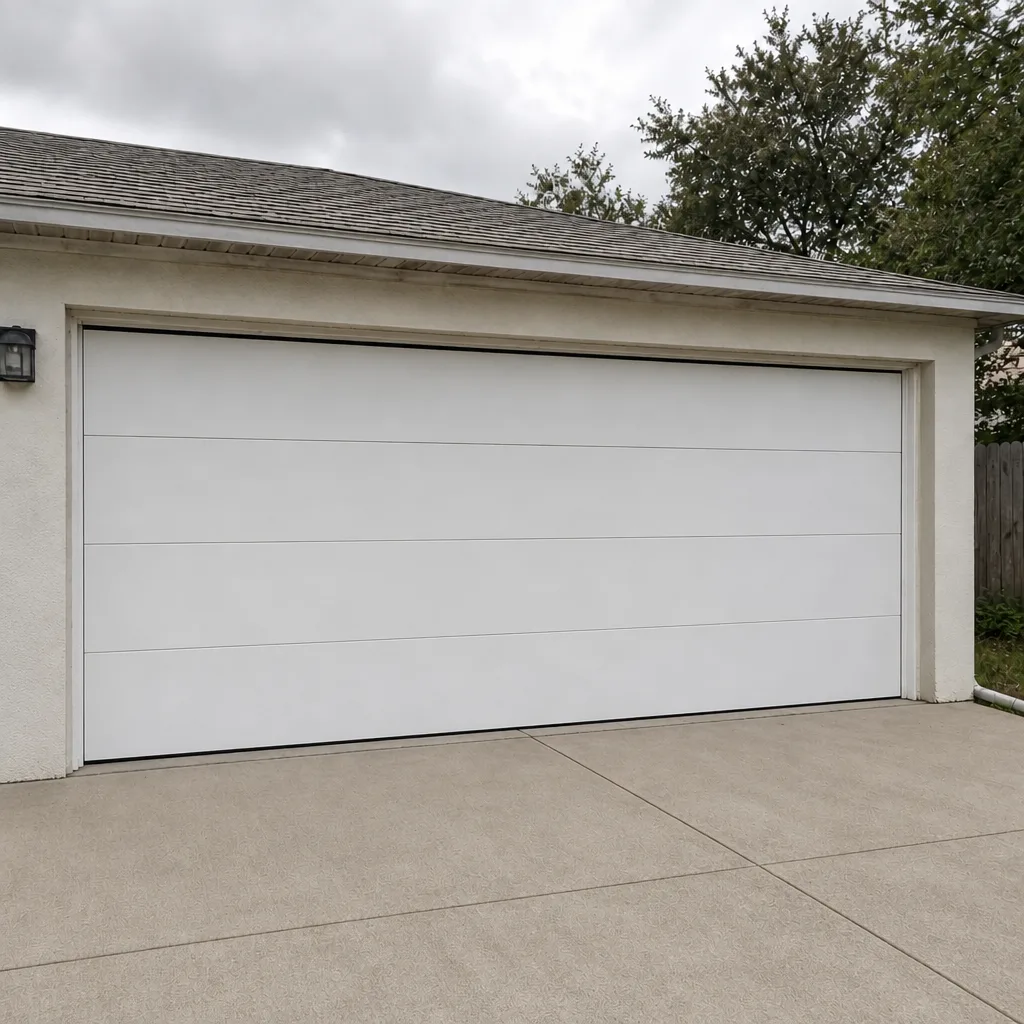 After
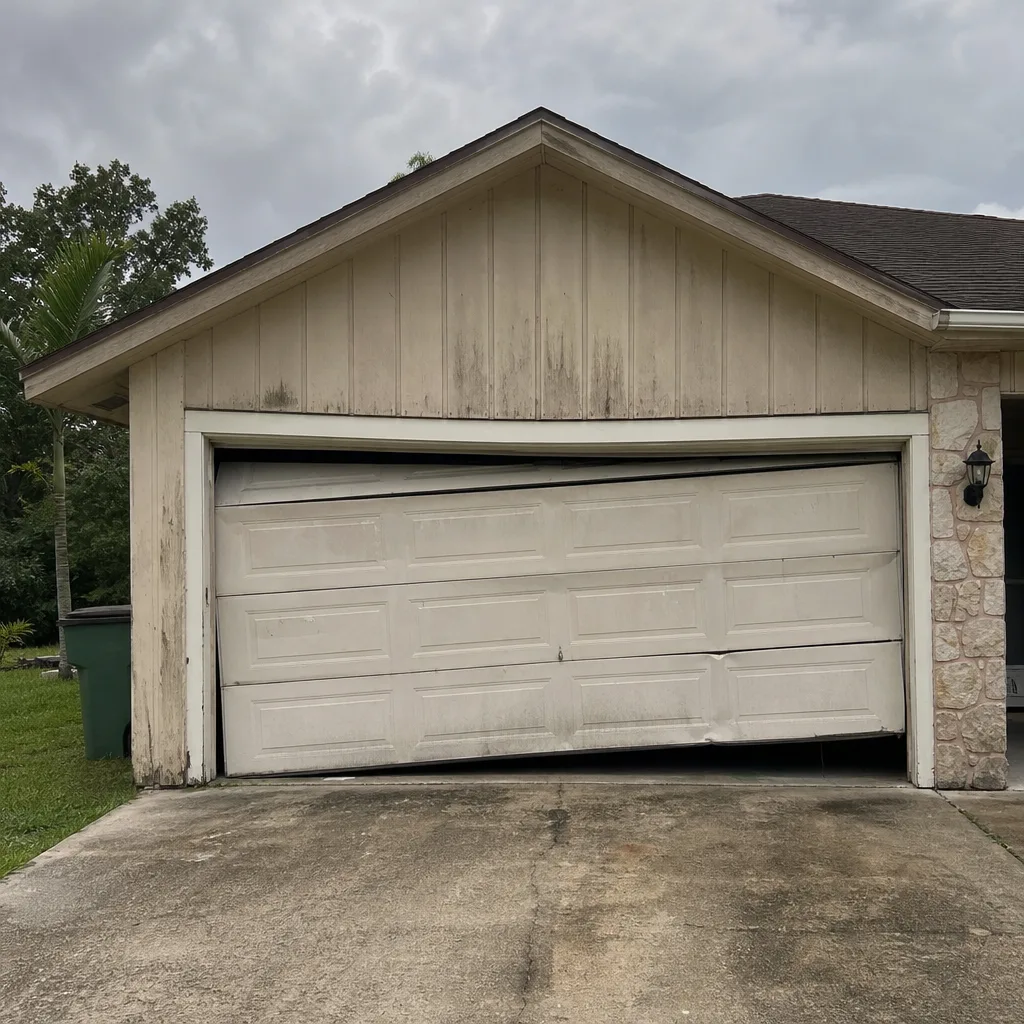 Before
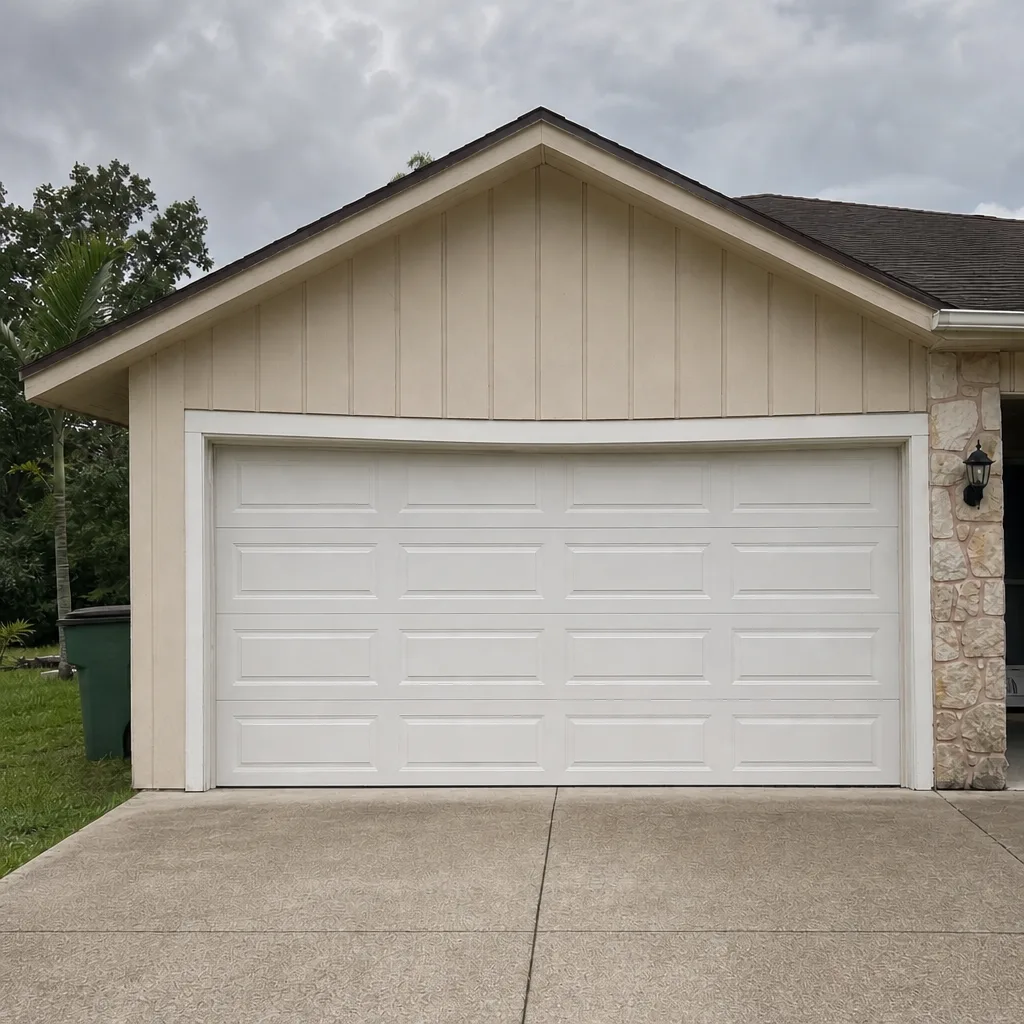 After
When to Call a Professional
Call a professional for anything involving spring tension, cables, or a door that has dropped or jumped the track. Those aren’t things to learn on the job, and the risk is injury. There are quieter reasons too: a door that needs two hands to lift, one that creaks at the same point every day, or a slow-moving door that you’ve started to arrange your day around. Any of those are fine reasons to book an appointment, and no reason to feel awkward about a small problem. Port Saint Lucie Garage Door Repair offers free estimates in Port Saint Lucie – call (855) 337-1068. Tell us the brand, the sound, and when it happens, and we’ll know what it needs. Our technicians have up to 13 years of experience, and garage doors are all we do. The local pro who arrives is licensed and insured as the state requires, and the price is quoted and agreed before any work starts.
Frequently Asked Questions
A broken garage door spring sounds like a single sharp snap or bang, often loud enough to hear from inside the house, followed by a door that won’t lift or won’t lift more than a foot. The snapping sound is the wire releasing its tension all at once. If you heard that sound, stop using the door and call (855) 337-1068. We answer 24/7. A call outside dispatch hours is booked into the next opening, Sunday through Friday, 7am to 7pm.
You can resolve the harmless noises yourself, but not the ones that involve spring tension or wiring. A squeaky roller is generally a lubrication and wear issue, and a technician can handle it on a regular visit. Anything involving a spring, a cable, or the opener’s electrical panel is where we draw the line. Don’t reach up into a spring assembly, and don’t open an opener housing to diagnose a relay. Call (855) 337-1068. The estimate is free, and the price is agreed before work starts.
A garage door that has suddenly slowed down is usually reporting one of three things: a spring that has lost tension, a motor overheating in the garage heat, or a door that’s dragging on a worn seal or a misaligned panel. The key word is suddenly. The door we want you to notice is the one that changed. It’s worth seeing it on a warm afternoon before you call, so you can tell us the time of day. Call (855) 337-1068 and we’ll get it looked at.
White mineral dust on a spring is a sign of long-term moisture exposure, not an automatic failure. It means the metal has spent a long time wet, which is common in a humid garage. It’s worth an inspection, especially if the same door also has rust scale or a gap in the coil. The estimate is free. Call (855) 337-1068.
Cosmetic signals like a squeak or surface rust tolerate a scheduled appointment. Signs in movement or sound that have recently appeared should be seen within a week. A broken spring, a frayed cable, a door off its track, or a door that has dropped is not a wait-for-it item. In this heat and humidity, wear on springs and openers tends to move faster than homeowners expect, so we lean toward getting it seen. Call (855) 337-1068 and we’ll tell you plainly which category you’re in.
The price you’re given is the price you agree, before any work starts. Our estimates are free, and the written estimate sets the final price. We don’t move the number after the job begins, and the technician will explain what’s being replaced before touching anything. Call (855) 337-1068 for an exact quote.
The Bottom Line
Garage doors fail predictably, and almost all of them announce the failure weeks or months in advance. Sound is your first alarm: a squeak is usually a roller, a pop is a spring, and a grinding rasp near one corner is a cable. Movement is your second: a hesitation at the halfway point, a door that drifts, or a thud at the end of travel means the balance has changed. Sight is your third, and a gap in the spring coil or white mineral dust belongs on your radar in a Port Saint Lucie garage. Sort what you find into scheduled, this week, and today, and keep the danger with the springs and cables in the professional’s hands. That’s the whole guide. For anything on your door, Port Saint Lucie Garage Door Repair can tell you what it needs. Call (855) 337-1068. We answer 24/7, with fast dispatch from 7am to 7pm, Sunday through Friday.
If the answer to your question is “my door isn’t going anywhere,” that’s a call, not a study session. We’ll tell you the cause and what it takes to fix it, and we’ll never talk you out of a repair you don’t need. Call garage door opener repair for opener trouble or spring replacement for a snapped spring, and keep the number handy.
Written by the team at Port Saint Lucie Garage Door Repair.