
Last updated November 21, 2026
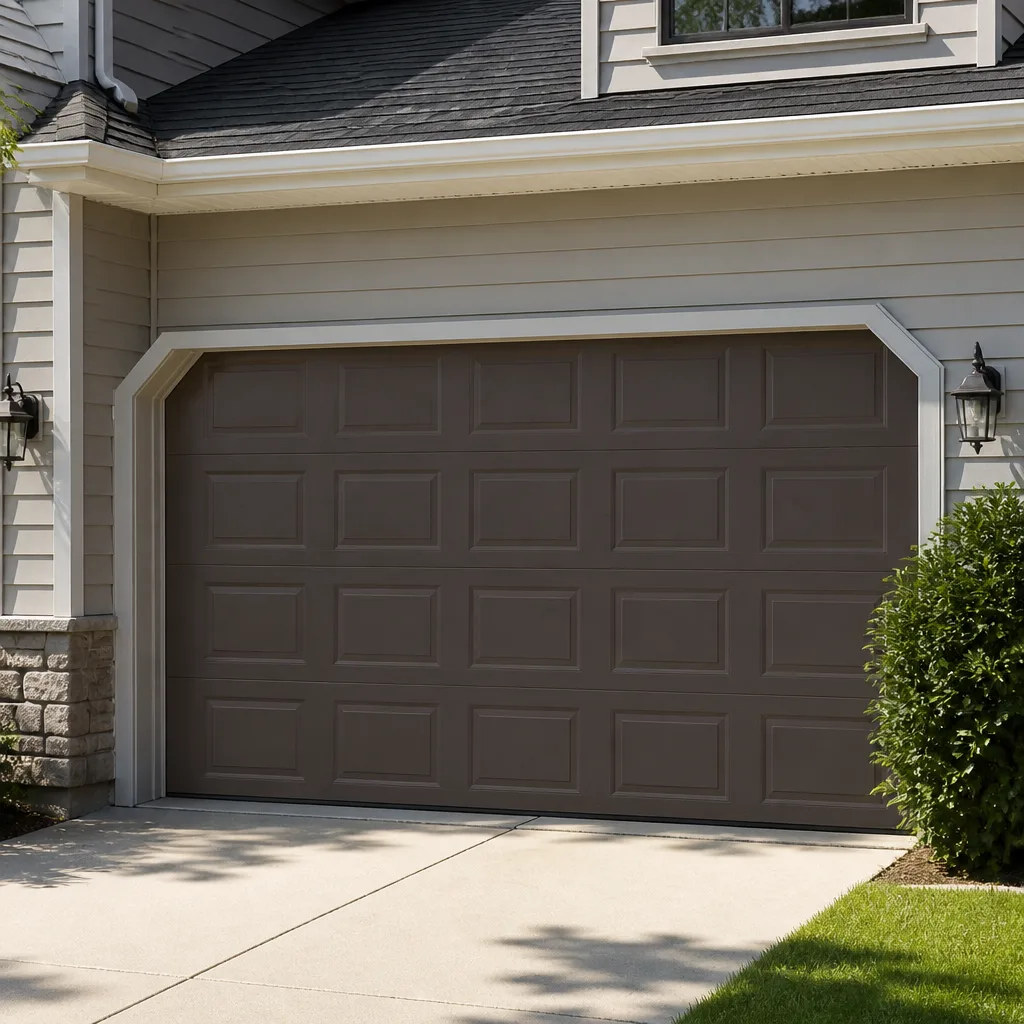 Raised-panel steel
 Carriage house
 Modern flush
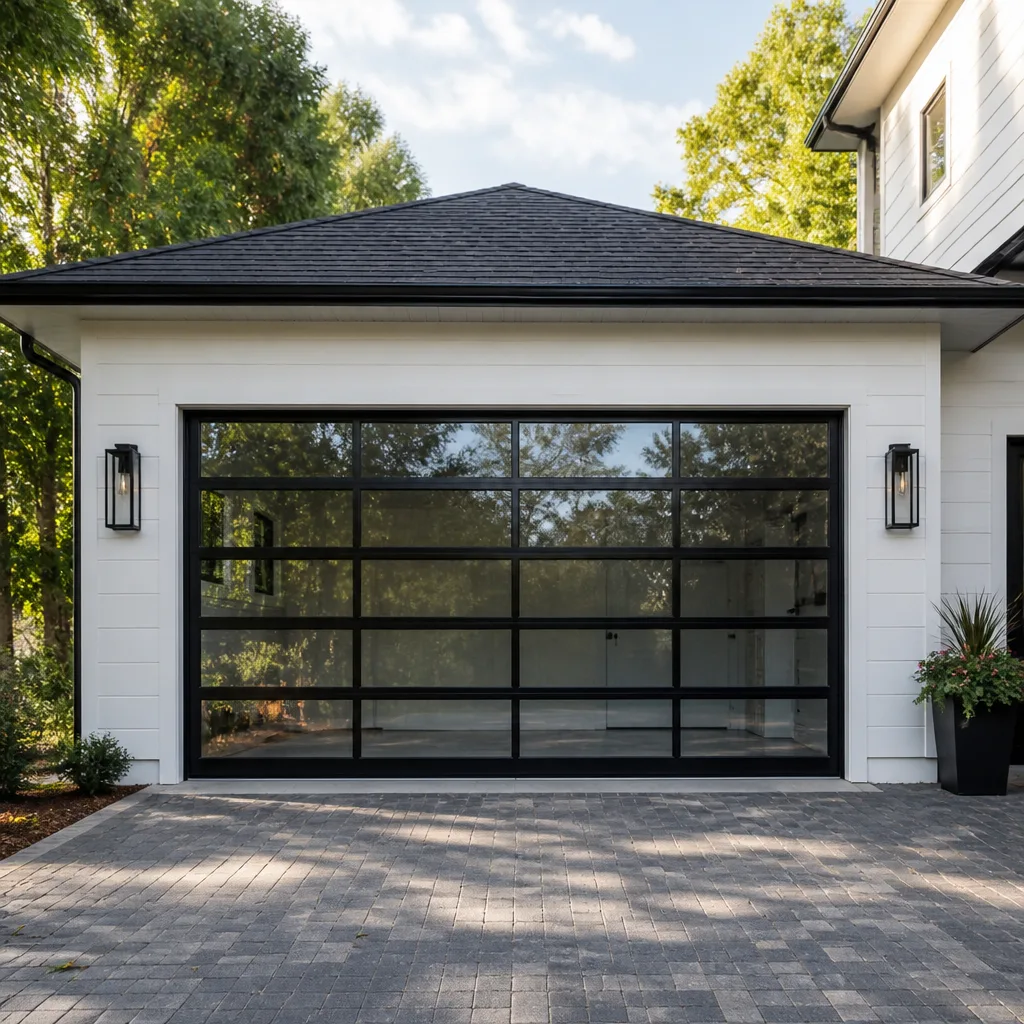 Full-view glass
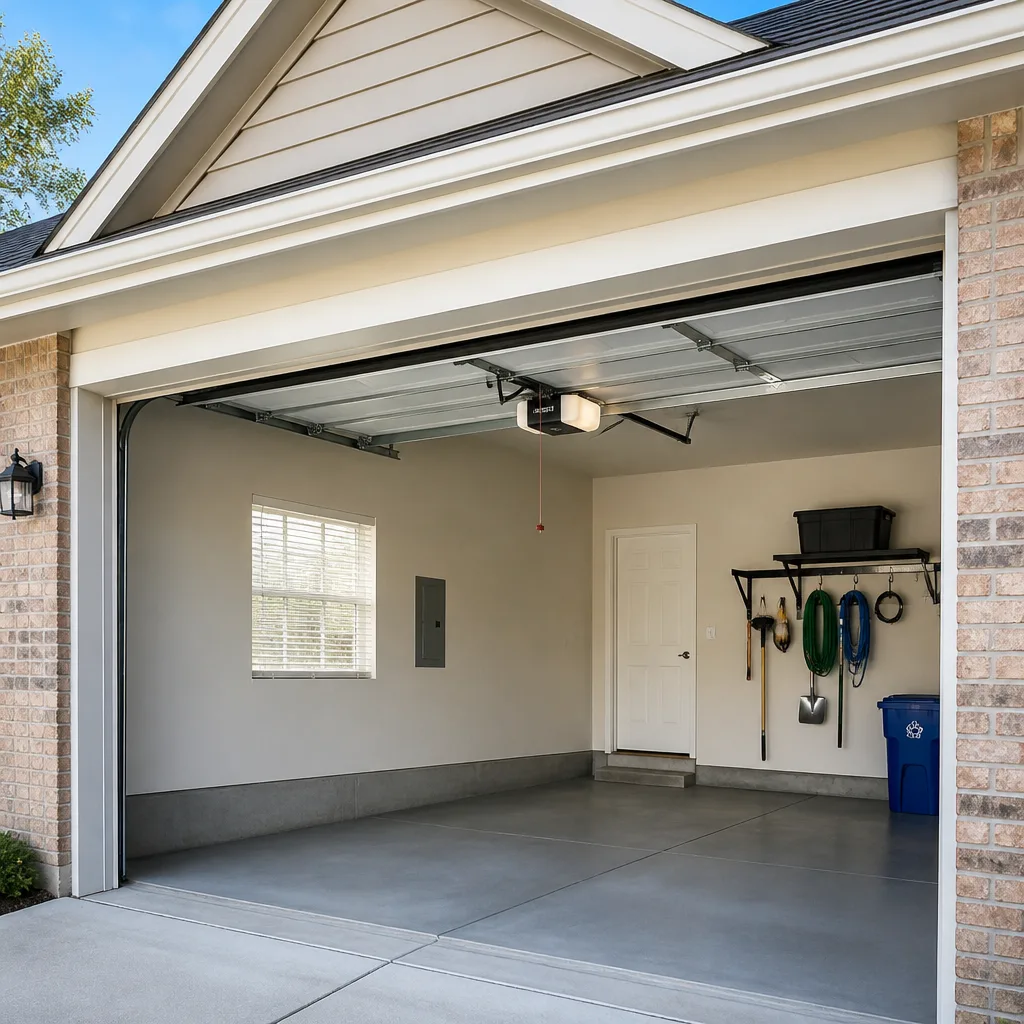 LiftMaster openers
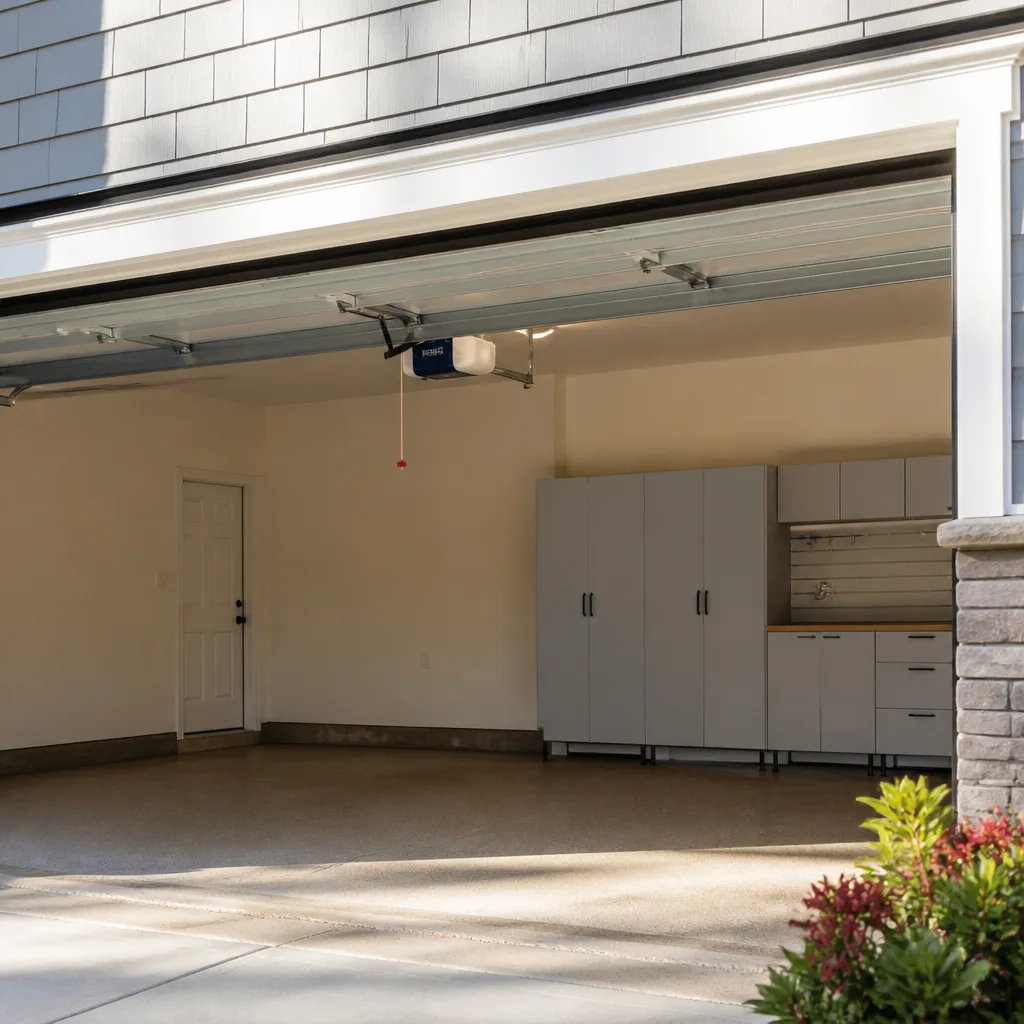 Chamberlain openers
Full 25-point door and opener safety check with every visit - springs, cables, rollers, tracks, and your LiftMaster or Chamberlain opener included
You get a price before we start. It does not change when the pro arrives.
Get your free estimateDIY vs Professional Garage Door: The Port Saint Lucie Homeowner’s Decision Guide
Most garage door advice online treats the whole system as one repair, and that’s where people get hurt. Replacing a torsion spring and lubricating a roller sit at opposite ends of the scale, but they get explained in the same cheerful tone by the same video. The truth is that a garage door is a machine under constant tension, and the parts that fail most often are the ones holding that tension. This guide separates the jobs you can do safely from the jobs that can break a wrist or void a warranty. We’ll walk through the three task categories, the Florida rules that affect who can legally touch your door, the warranty language that trips people up, and the maintenance work that actually saves you money in Port Saint Lucie.
Quick Answer
Most garage door jobs split into three groups: light maintenance you can safely do yourself (lubrication, visual checks, cleaning), middle-ground tasks that are doable but risky (roller and bottom-seal replacement), and professional-only work (springs, cables, torsion hardware, opener board replacement). In Florida, any repair beyond basic maintenance is best handled by a licensed contractor, and DIY spring work carries serious injury risk and can void the door manufacturer’s warranty. We recommend calling a pro for anything involving tension, cabling, or the opener’s internal electrical components; keep the routine maintenance for yourself.
Styles & brands we work with
- Raised-panel steel
- Carriage house
- Modern flush
- Full-view glass
- LiftMaster openers
- Chamberlain openers
Table of Contents
- The Three-Column Breakdown: Safe DIY, Risky DIY, Professional Only
- What Florida Law Actually Requires
- The Warranty Clauses That Bite DIYers
- Cost-Benefit: When Paying a Pro Is Actually Cheaper
- Maintenance You Can and Should Do Between Professional Visits
- Port Saint Lucie Home and Climate Considerations
- Tools and Safety Gear That Matter
- How to Decide in Under Five Minutes
The Three-Column Breakdown: Safe DIY, Risky DIY, Professional Only
Not every garage door task removes the same risk. The categories below reflect what we’d tell any homeowner over the phone. Anything with stored mechanical energy at rest (springs, cables, torsion bars) belongs in the third column. Cosmetic and cleaning work sits in the first. Rollers, seals, and light hardware sit in the middle, where a careful homeowner can do the work but should understand what can go wrong first.
Safe DIY (low risk, no special tools, no warranty impact)
- Lubricating hinges, rollers, and the track with a garage-door-specific lube (not WD-40).
- Wiping down the panels and window inserts.
- Testing the safety reverse by placing a roll of paper towels in the door’s path.
- Tightening loose hinge screws and the bracket bolts that hold the track to the jamb.
- Clearing debris from the track with a damp cloth.
- Replacing the remote batteries and re-pairing the remote to the opener.
Risky DIY (doable but understand the failure mode)
- Replacing plastic rollers with nylon or steel ones. Each roller is under moderate load and can fly loose if the door is in the wrong position.
- Swapping the bottom rubber seal (the astragal). Requires the door fully closed and usually a helper.
- Replacing the weatherstripping around the frame.
- Changing the opener’s light bulbs, travel limits, and force settings if you follow the manual exactly.
- Adjusting the safety eye alignment if the sensors have been bumped.
Professional only (do not attempt)
- Torsion spring replacement, adjustment, or winding. These store enough energy to break bones, and the winding bars are specialized tools you shouldn’t buy for one job.
- Extension spring replacement on older Port Saint Lucie homes with side-mounted springs.
- Cable replacement or re-cabling. Cables snap with little warning and are under the same tension as the spring.
- Bottom bracket repairs, which hold cable tension and are a known crush risk.
- Replacing the opener’s logic board, capacitor, or motor.
- Adjusting the counterbalance (adding or removing turns from a spring).
- Replacing a broken hinge on the top section, which affects the panel’s structural alignment.
The rule we give people is simple: if your hands will be inside or between the door panels and the track while the door is at rest, stop. That includes springs, cables, brackets, and drums. Those parts carry the counterbalance that lets a 150-pound door move with one hand.
What Florida Law Actually Requires
Florida doesn’t have a single garage door statute that says “torsion springs are contractor work.” But two overlapping rules do affect who can legally do the job. First, most municipalities require a permit for a new door installation or any change to the structural framing and tracks. Permit applications in the state generally require a licensed contractor, so the “I’ll just install it myself” path usually stalls at the permit counter. Second, any work that involves the electrical system of the opener falls under electrical contracting rules, and most cities won’t issue a homeowner permit for modifications to hardwired opener circuits.
What a Port Saint Lucie homeowner can legally do without a permit typically includes:
- Routine maintenance (lubrication, cleaning, tightening hardware).
- Replacing the bottom seal, weatherstripping, or rollers.
- Changing the battery in a remote or keypad.
- Reprogramming an opener’s travel and force limits when following manufacturer instructions.
- Adjusting the safety photo-eye sensors.
What typically requires a permit or licensed contractor:
- Full door replacement, including changing the door size or panel style.
- Replacement of the tracks, the torsion bar, or the opener’s hardwired electrical circuit.
- Anything that changes the opening’s structural framing.
If a task touches the wall’s electrical wiring, the door’s structural engineering, or the counterbalance, plan for a permit conversation with the city’s building department. That same rule applies whether you’re in Port Saint Lucie or twenty minutes west. If you’re in any doubt about your own home, call the department and ask a five-minute question before you pick up a wrench.
Florida’s homeowner insurance carriers also increasingly ask about the age and condition of the garage door when underwriting. A door that failed because the counterbalance was DIY-adjusted can create coverage questions if a claim is filed for impact damage later. The safe approach is a written record of professional work on anything structural.
The Warranty Clauses That Bite DIYers
Door and opener manufacturers write their warranties to protect the factory-installed parts from modifications they can’t inspect. That’s not a knock on manufacturers; it’s how the economics of a long warranty work. The clauses that come up most often in real warranty claims involve three things: improper spring tensioning, unauthorized opener modifications, and non-spec hardware.
Common warranty clauses to look for in your own manual:
- Counterbalance and spring void. Almost every door brand voids spring coverage if the spring is replaced with a non-OEM part or adjusted by anyone other than a trained technician. On a LiftMaster or Chamberlain opener, the wall-mounted motor itself is usually fine, but the door manufacturer’s warranty is what’s at risk.
- Improper tensioning. If a torsion spring breaks and the door is under warranty, the manufacturer’s inspector will look at the spring’s drums, cables, and winding marks. A field-modified spring usually ends the claim right there.
- Non-spec hardware. Swapping a roller, bracket, or hinge for a brand that doesn’t match the door’s listed parts can void panel coverage if the hardware is implicated in the failure.
- Opener training and limits. Chamberlain and Genie manuals instruct owners not to change the printed circuit board or motor, and setting the travel too aggressively is a common documented reason for door-opener warranty denials.
- Paint or sealant changes. Clopay and Wayne Dalton manuals specify compatible finishes; a repainted door that uses the wrong prep can be flagged if the panel warranty is ever claimed.
None of these clauses affect basic maintenance or cosmetic work. Lubricating hinges has never voided a door warranty; replacing a torsion spring with an eBay replacement has, and we’ve seen it play out in warranty conversations with homeowners who had no idea. The pattern is consistent: the more precisely the manufacturer specifies the part, the more the warranty hinges on getting it right.
Ask a specific question before any repair that might touch a warranty: “Will this fix preserve the door’s coverage?” A written answer from the company doing the work is worth more than any verbal assurance. If a homeowner is on a LiftMaster or Chamberlain opener and the local pro is familiar with those brands, they can often align the repair to what the warranty allows without giving up performance.
For a deep dive on how we handle warranty-sensitive repairs, see our garage door repair page for the process we use. And if the opener’s the failing part, our garage door opener repair page explains what diagnostics happen on-site.
Cost-Benefit: When Paying a Pro Is Actually Cheaper
The instinct to DIY a garage door comes from comparing the quote to the part price. That comparison misses three costs: the tools you have to buy, the risk of a second repair when the first attempt goes wrong, and the value of your time. Here’s how the three most-attempted DIY jobs in Port Saint Lucie actually pencil out.
1. Replacing a broken torsion spring
The part alone runs a modest amount. But a homeowner doing it themselves is buying two winding bars, a proper tension tool, and safety glasses, and spending several hours learning the process. One slip, and the spring releases its stored energy in a way that has injured a lot of people. On a matched pair, both springs should usually be replaced together so they wear evenly, which doubles the parts and the tension risk. Our Port Saint Lucie Garage Door Repair page covers how we handle spring failures as a core service, and it’s the repair we’re most often called to redo after an attempted DIY fix.
2. Replacing rollers and hinges
This is genuinely close to break-even. A homeowner can buy rollers and hinges at a hardware store, but the door has to be positioned correctly, panels can shift, and the wrong roller size rubs the track. If a hinge fails while the door is cycling, the panel can warp, and that’s a much bigger repair. Roller replacement is one of those jobs that is fine to attempt if you have a helper and the right parts on hand; otherwise, it’s the kind of thing a pro knocks out in under an hour.
3. Repairing or replacing the opener
Opener repair is the classic DIY trap. The board looks like a plug-and-play part, but the opener is embedded in the home’s electrical wiring and the door’s travel system. A wrong board misreads the safety eyes and can reverse mid-close on a person. It also creates a warranty problem on LiftMaster and Chamberlain units if the board is not the listed part. The bill for getting it right once is usually smaller than the bill for the failed attempt plus the replacement opener.
What the trade-off really looks like
- Springs and cables: DIY is not worth the risk. The cost of parts is close to the cost of labor, and the injury and warranty risk dwarfs the savings.
- Rollers, seals, and hinges: DIY is reasonable if the door is in good alignment and you have the right part numbers.
- Opener boards and motors: DIY is rarely worth it, mostly because the electrical part is where the safety systems live.
- Full door replacement: Not a DIY job. Track alignment, spring calibration, and permit requirements make this professional work.
The honest test: if the total parts and tool cost is within 30% of a written estimate, the pro is the better value. You’re not just buying labor. You’re buying a warranty, alignment, and calibration you can’t easily reproduce. Free estimates mean the comparison is easy to make; call (855) 337-1068 and ask for a written number.
Maintenance You Can and Should Do Between Professional Visits
The single best way to reduce garage door service calls is routine maintenance, and it’s almost all DIY. In our experience, the door that gets lubricated and inspected twice a year is the door that doesn’t snap a spring on a Saturday morning. Here is a simple schedule any Port Saint Lucie homeowner can run.
Monthly (10 minutes)
- Look at the door from inside. Are there gaps in the panels? Are any hinges or brackets bending?
- Press the wall control and watch the full cycle. Does the door move smoothly, or does it jerk partway up?
- Test the safety reverse by placing a roll of paper towels in the path while the door is closing.
Every few months (30 minutes)
- Lubricate hinges, rollers, and the track with a garage-door-specific lube. A silicone or lithium product works; skip anything that’s advertised as a general-purpose penetrating oil.
- Wipe the track with a damp cloth to remove grit.
- Tighten any loose hinge screws and bracket bolts.
- Inspect the weather seal along the bottom for cracks and replace it if it’s stiff.
Annually (a look from a pro)
- Have a technician check spring tension, cable wear, and roller condition.
- Have the opener’s force and travel limits measured against the manufacturer’s spec.
- Have the door’s balance checked with the opener disconnected (the door should hold its position when raised halfway).
That annual check is where we catch the spring that’s losing tension before it lets go, and where the cables that have started to fray get flagged. In the mild Port Saint Lucie climate, doors don’t get the cold-weather wear of northern states, but they do see heat and humidity that slowly degrade rubber seals and wood framing. Rubber seals that stay pliable protect the door’s panel warranty just as much as the paint does.
Port Saint Lucie Home and Climate Considerations
Port Saint Lucie’s housing stock is a genuine mix: older single-story homes with wood-framed doors, newer builds in the PGA Village and Tradition areas with steel-backed or carriage-style doors, and neighborhoods full of models where the garage faces the street and takes the afternoon sun. That mix matters because the failure pattern changes with the door type.
- Wood-framed doors in older neighborhoods tend to need more frequent hinge and roller attention as the framing dries and loosens. A roll-up door that starts to groan is usually telling you the framing has moved slightly.
- Steel and aluminum carriage-style doors that get direct sun on the east or west face take more thermal expansion. The panels can sound louder and the seal can age faster, which is why we recommend inspecting the bottom seal every few months on west-facing doors.
- Humidity is the consistent maintenance issue in Port Saint Lucie. Rubber seals, weatherstripping, and the nylon bushings on LiftMaster and Genie openers all age in humidity. A quick visual pass on these parts catches most issues early.
- Rain and weather accelerate wear on the bottom seal because a wet seal drags against the slab. A stiff, warped seal adds load to the opener motor and can trip the force limit on a Chamberlain or Raynor unit.
None of these are emergencies. They’re the maintenance items that turn into bigger repair calls if ignored. A Port Saint Lucie homeowner who keeps the seal, rollers, and hinges in good shape is doing more for the long-term health of the door than any single upgrade. If you’re moving into a home here or have lived in the same one for a long time and never had the door checked, our garage door installation team can also assess whether a door is worth repairing or replacing.
Tools and Safety Gear That Matter
If you’re going to do the safe and middle-ground jobs, own the right tools. The wrong ones cost more time than they save and can leave you with a door that’s out of alignment. The list we’d give a homeowner who asked which tools to keep on hand is short.
- A garage-door-specific lubricant (silicone or lithium spray, not a general-purpose penetrating oil).
- A 7/16 inch wrench and a 1/2 inch wrench for hinges, brackets, and roller hardware.
- A socket set with the sizes matching your roller and hinge bolts (~1/2 inch and 7/16 inch cover most residential doors).
- A step ladder tall enough to inspect the top hinge and the opener’s rail.
- Safety glasses and gloves, worn even for the “safe” jobs; hardware can snap.
- A roll of paper towels for the safety-reverse test.
What we would not recommend buying for a single job: winding bars, cable clamps for re-cabling, torque wrenches for spring calibration, or any tool marketed for “DIY door installation.” Those jobs belong with the pro, and the tool cost alone usually exceeds what a licensed technician charges for the same work.
One safety note worth putting in plain language. Torsion springs store enough energy to cause serious injury if released unexpectedly, and the winding bars most homeowners buy online are not the same spec as the ones a trained tech uses. If your door’s spring is broken, do not attempt to wind or replace it yourself. Call a professional, and stay off the ladder in front of it until they arrive.
How to Decide in Under Five Minutes
If you’re trying to triage a garage door problem right now, run through this list. It’s what we ask homeowners over the phone before we schedule anyone.
- Is the door stuck open, stuck closed, or just noisy? A door that won’t close is a safety concern. Call today.
- Can you see a physical break? If the spring is visibly broken or the cable is frayed, stop touching it and call.
- Is the problem the opener (clicking, beeping, reversing on its own) or the door (not moving, crooked, scraping)? Opener issues get a repair call; door issues often need a spring or hardware check first.
- Is the door only a maintenance item (squeaks, a worn seal, a remote battery)? That’s your DIY list.
- Does the job require a permit or touch the electrical wiring? Call a professional and ask about permitting when you book the appointment.
- Do you have a second person to help and the right tools? If not, don’t start a two-person job alone.
We work on all eight major door and opener brands, from LiftMaster and Chamberlain systems to Genie and Raynor setups. Tell us the brand and the symptom, and we’ll usually know what the job involves before we arrive. That same knowledge is what tells us when a homeowner genuinely can handle the work themselves versus when they shouldn’t try.
Common Mistakes to Avoid
- Treating springs like any other hardware. A torsion spring isn’t a component you can swap casually. Anything on the torsion bar belongs to a technician, no exceptions.
- Lubricating the track with the wrong product. Aerosol household oils attract dust and grit, which accelerates roller wear. Use a garage-door-specific lube, and use less than you think you need.
- Adjusting the opener’s force or travel to make the door work. Bumping the force limit up so the door closes hides a broken spring or a bad seal and can defeat the safety reverse. Look for the cause instead.
- Replacing one spring on a matched pair. Springs wear together. Replacing just the broken one puts the older spring back into a mismatched pairing and shortens the new spring’s life.
- Ignoring a fraying cable. A cable with a few strands broken is on its way to a snap, and a snapped cable often damages the door. It’s a repair call, not a roadside fix.
- Assuming the door warranty covers DIY work. It usually doesn’t, and the manufacturer will ask for the parts list. Keep receipts if you touch the door’s hardware.
- Skipping the permit on an installation. Most Port Saint Lucie door replacements need a permit, and an unpermitted install can surface later when you sell the house.
See the difference
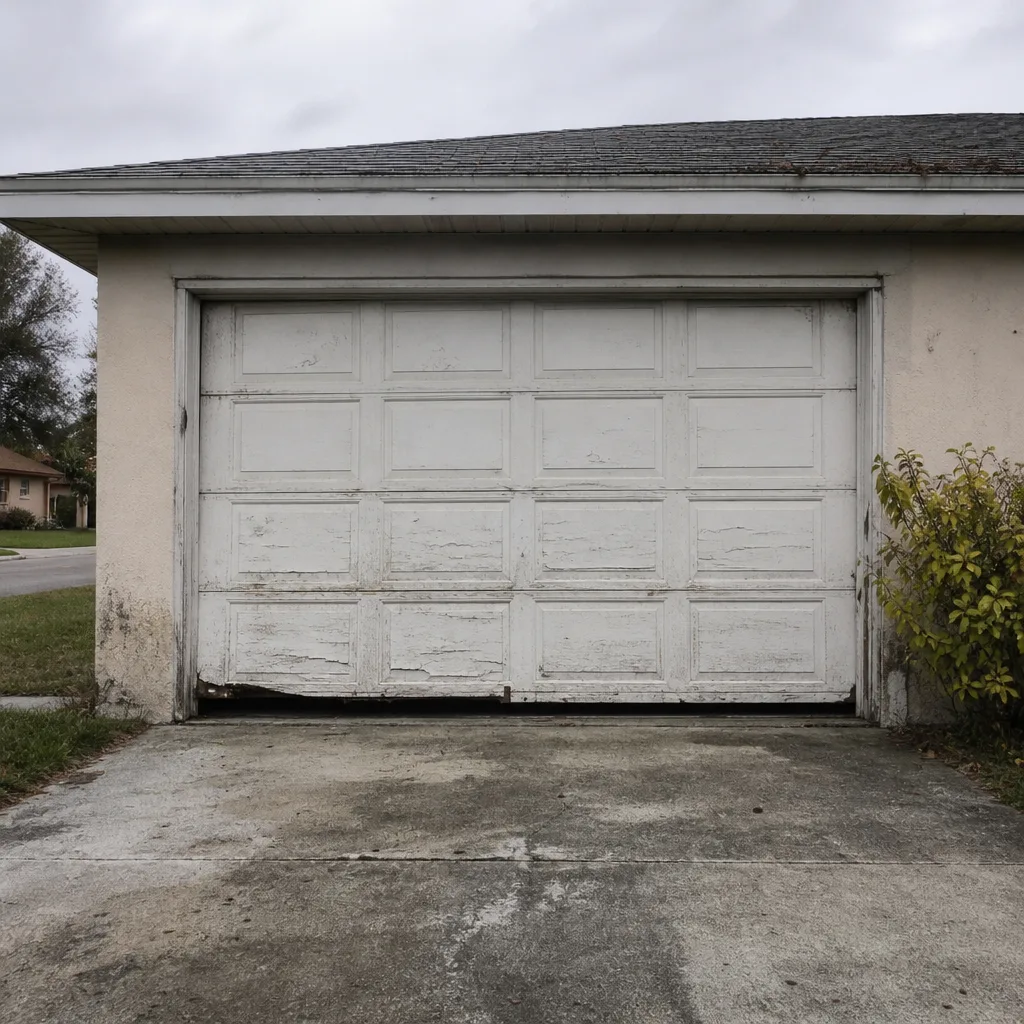 Before
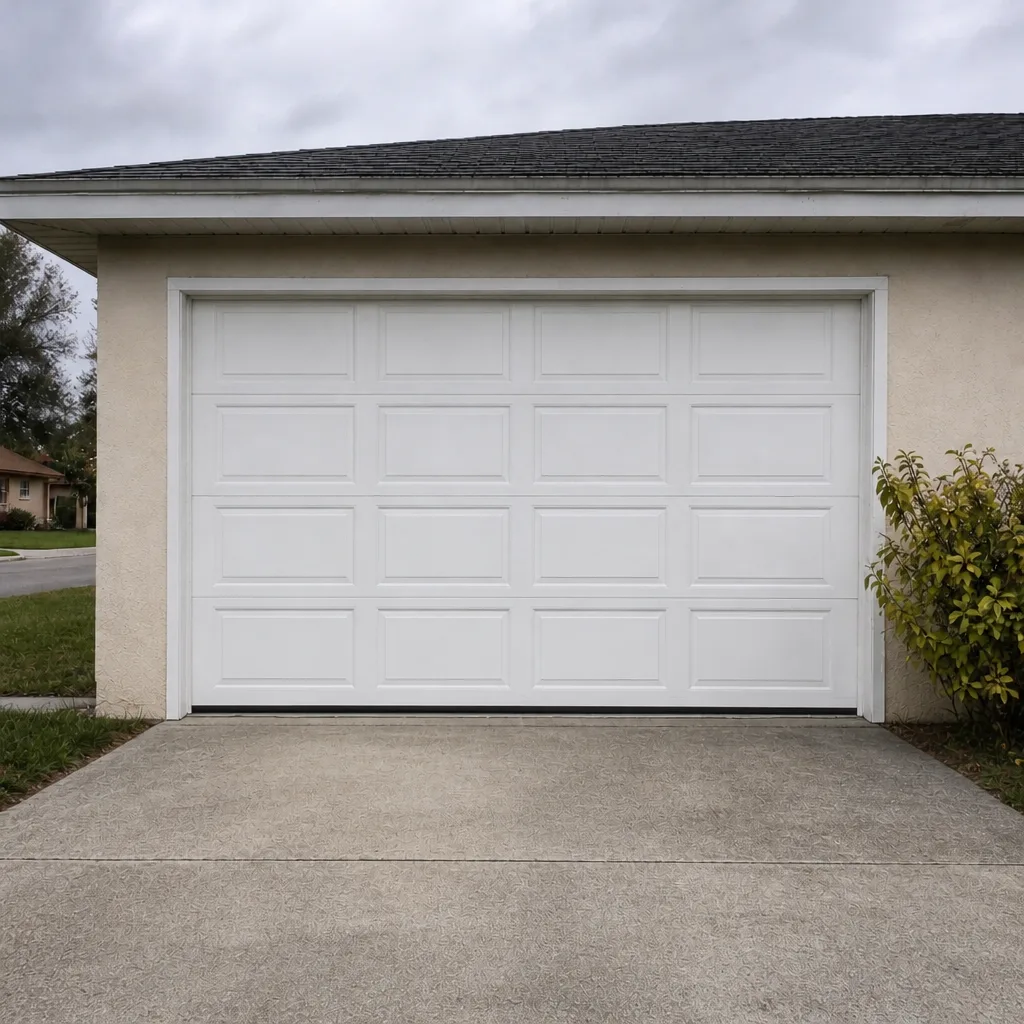 After
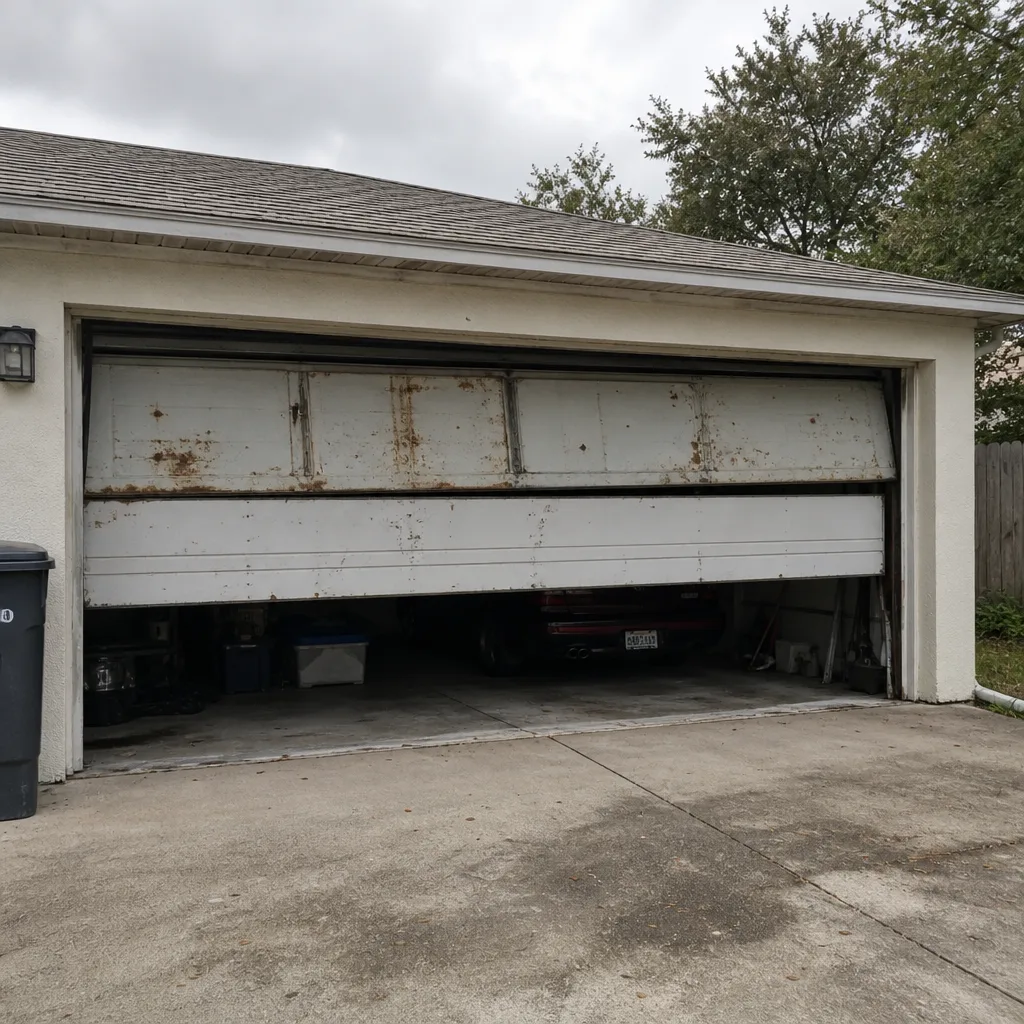 Before
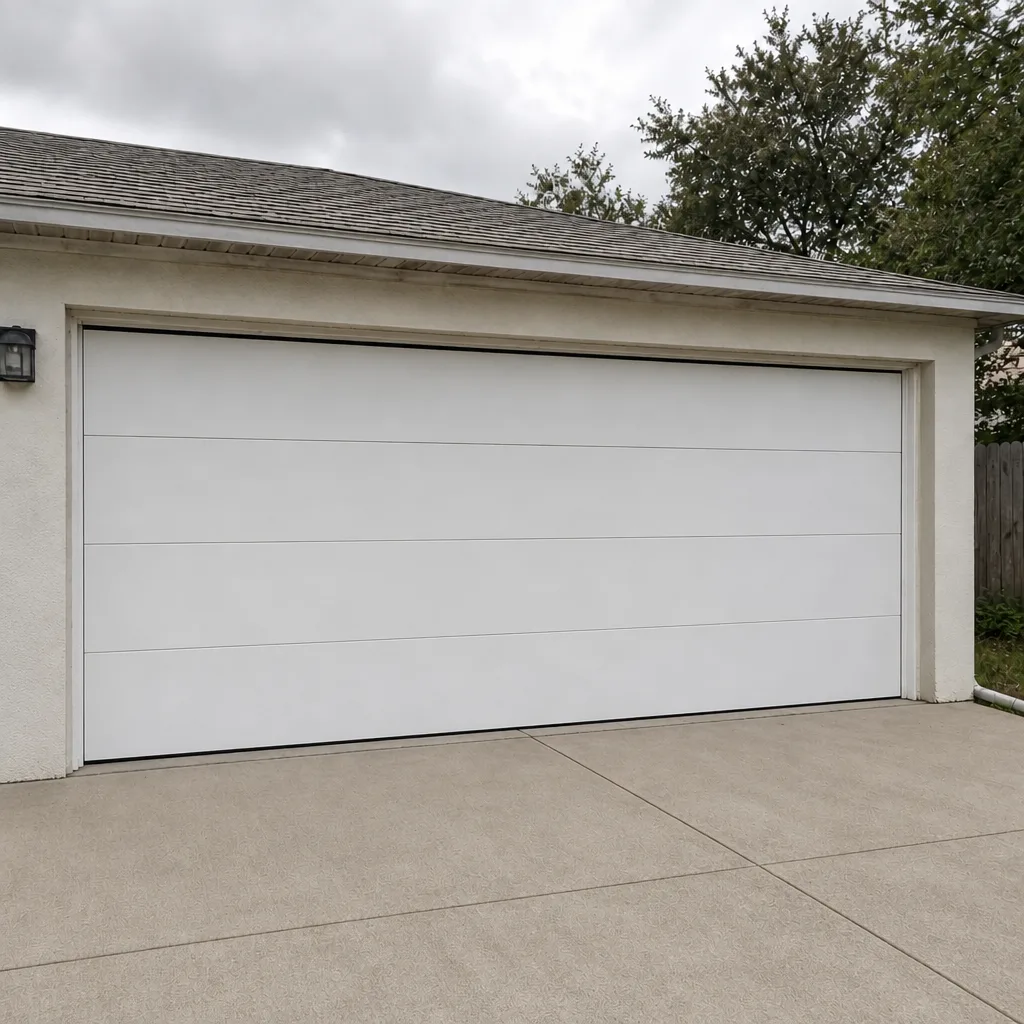 After
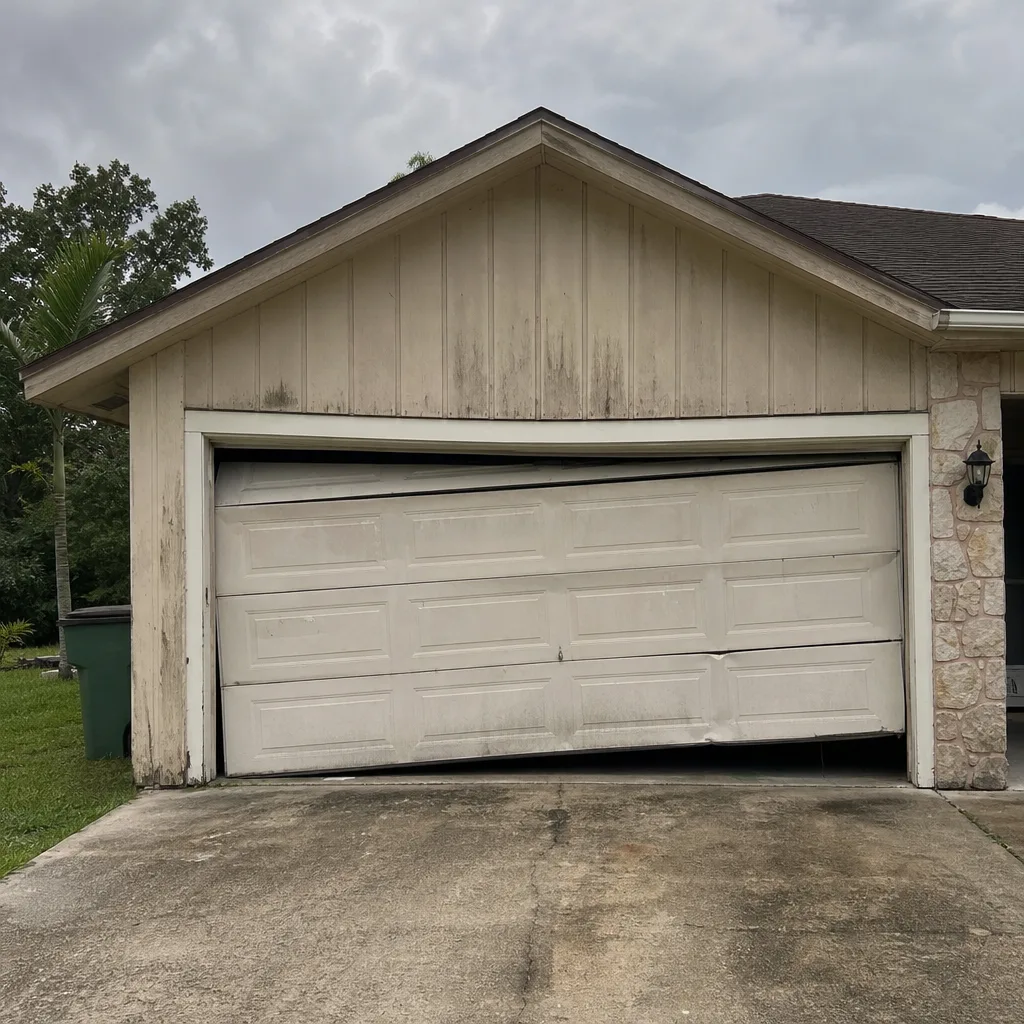 Before
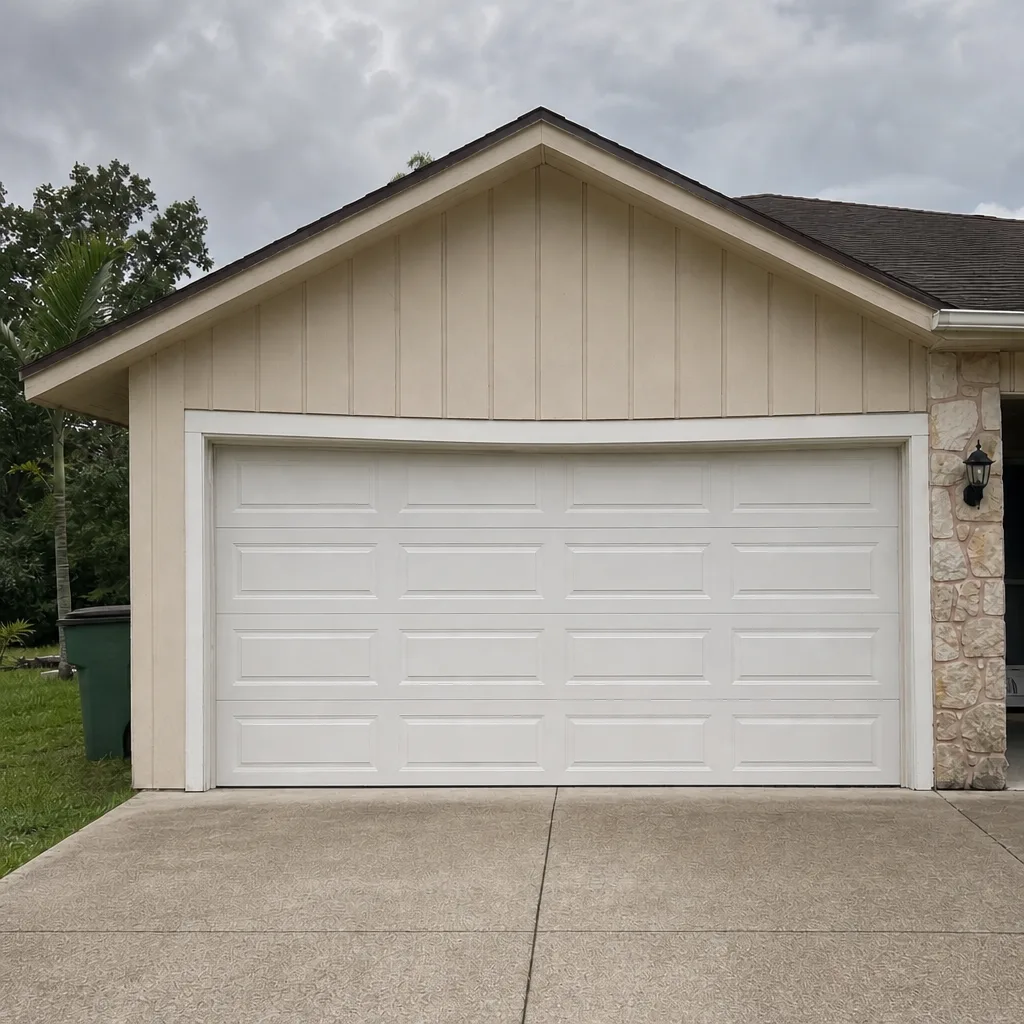 After
When to Call a Professional
Call a professional when the failure involves the counterbalance system, cabling, the opener’s electrical parts, or anything that affects how the door moves under load. That means a broken or sagging door, a spring that’s visibly failed, a door that reverses unexpectedly, a loud clang from the opener, or a door that has come off its track. It also means any full-door replacement, since the permit and calibration work is outside typical homeowner scope. If the door works fine but is noisy, skipping its maintenance check is what turns a small bill into a spring replacement. Our technicians have up to 13 years of experience with every major residential system, and we can talk through the symptom before we schedule anything.
Port Saint Lucie Garage Door Repair offers free estimates in Port Saint Lucie. Call (855) 337-1068. We answer 24/7. Fast dispatch, 7am-7pm. The estimate is free, and the price is set per job by the written estimate before any work starts.
Frequently Asked Questions
You shouldn’t. Torsion and extension springs store enough energy to cause serious injury, and the winding tools most homeowners buy are not the same spec a technician uses. Spring replacement is also one of the most common reasons a door warranty claim gets denied. Call a licensed professional, and leave the spring alone until they arrive.
Often, yes, depending on what you touch. Lubricating hinges or replacing a bottom seal won’t affect coverage. Replacing a spring with a non-OEM part, swapping an opener board, or using hardware that doesn’t match the door’s listed parts can void coverage on the affected components. Check your manual’s specific language, and keep receipts if you do the work.
Most cities, including Port Saint Lucie, will not issue a homeowner permit for structural door replacement, track changes, or hardwired opener work. Maintenance, seals, and roller replacement generally don’t require a permit. If the job involves a permit or the electrical system, ask your city’s building department before starting, and bring the question to us if you’d like the install handled as part of the estimate.
Yes for most repairs, especially spring and opener failures. Same-day service is available, and we schedule the same day or next opening depending on the job. For a full replacement, expect a short measure-and-order window since the door has to be sized and ordered first. Same-day repair work is quoted the same way as scheduled work: the written estimate sets the price.
Lubrication, visual inspections, cleaning the track, tightening loose hinge screws, replacing the bottom seal, battery changes, and the monthly safety-reverse test. These are all safely within homeowner scope, and they genuinely reduce service calls. Anything that touches the springs, cables, brackets, or the opener’s electrical components is professional work.
Spring replacement and opener board replacement, in that order. Homeowners usually start with a YouTube video, buy the part, and then call when the door isn’t running right or the opener won’t relearn its limits. Starting with a free estimate is usually cheaper than the failed attempt plus the follow-up repair. Call (855) 337-1068 for an exact quote, and we’ll tell you whether the job is small enough to leave alone or urgent enough to schedule today.
The Bottom Line
The DIY-versus-pro question is really about where the risk sits. Lubrication, seal replacement, and visual inspections make your Port Saint Lucie door last longer, and you should do them. Spring, cable, torsion, and opener board work is a different category because the failure mode is dangerous and the warranty consequence is real. Use the three-column breakdown as a filter, and use the cost-benefit test we walked through: if the parts and tools are close to the quote, the pro is the better deal. You’re buying calibration, a written record, and safety, not just labor. When in doubt, ask a specialist. It’s a two-minute phone call.
Call (855) 337-1068 for a free estimate. We answer 24/7, with fast dispatch from 7am to 7pm, Sunday through Friday. Free estimates, and the price is quoted and agreed before any work starts.
Written by the team at Port Saint Lucie Garage Door Repair.